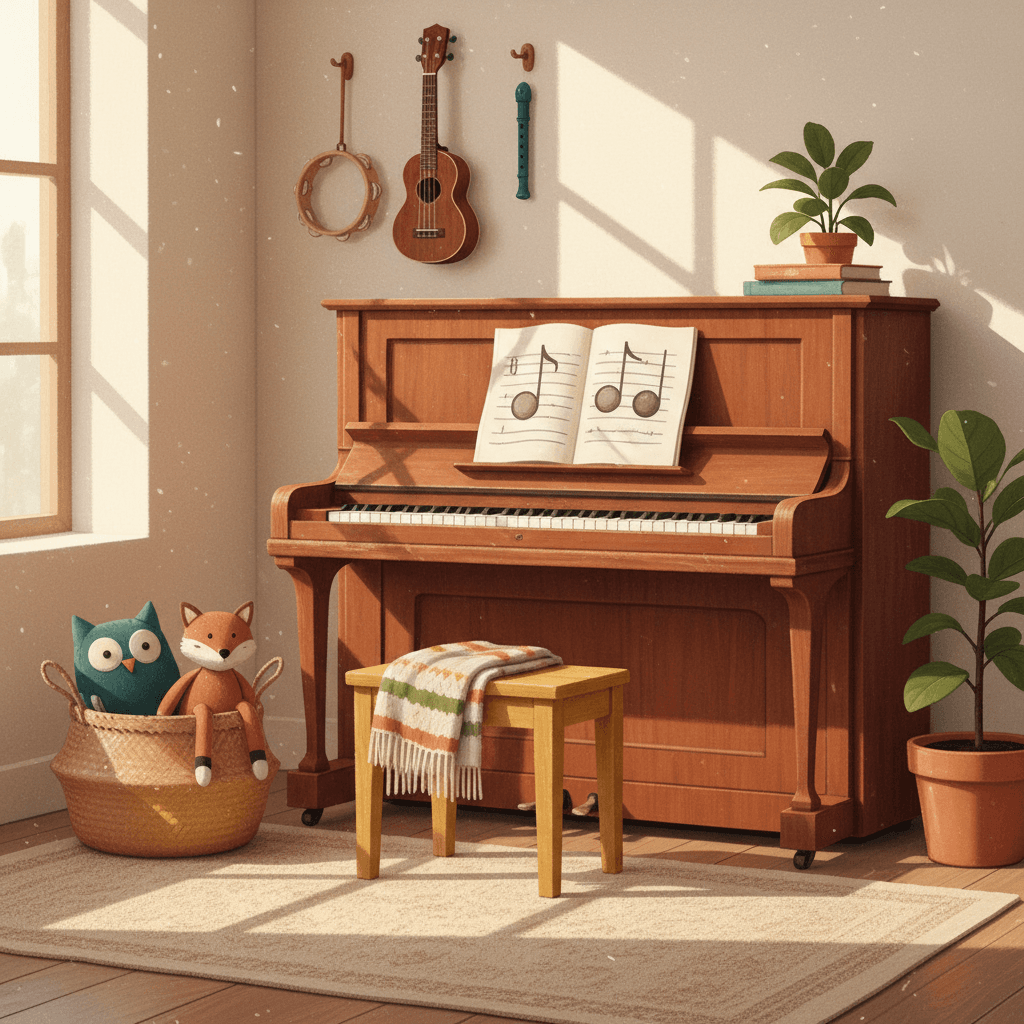
Kids' Piano Lessons Near Me: Find a Qualified Local Teacher
Help your child start piano with a qualified local teacher. Learn the right age to begin, what lessons include, and how to choose the best instructor for your kid.
Finding the right piano teacher for your child makes all the difference between a lasting love of music and an instrument that gathers dust. Most children are ready for structured lessons between ages 6 and 9, though readiness signs matter more than age. A warm, skilled instructor builds both technique and confidence from the very first lesson.
Why Piano Is a Great First Instrument for Children
Research consistently shows that children who begin piano training before age 7 develop stronger neural pathways for language and mathematics. Piano is the only common beginner instrument that presents pitch, rhythm, melody, and harmony simultaneously from the very first lesson, making it one of the most complete musical starting points available to young learners. The keyboard spans 88 keys, offering a visual map of every Western pitch relationship in a single glance. Studies link piano training to improved spatial-temporal reasoning in children as young as 3. And because students read both treble and bass clef from the start, they build a skill that transfers to every other instrument they may explore later.
How piano builds foundational music theory skills from day one
The keyboard's linear layout is genuinely unique among instruments: interval relationships and scale patterns are visible before a child can read a single note of notation. In early music classes, that visibility transforms abstract musical concepts into something a child can see and touch. A first lesson typically covers note names, basic rhythm values, and simple dynamics, weaving musical awareness and training into a single thirty-minute session rather than treating theory as a separate subject to be tackled later. For families who want more context before committing, the guide to getting started with piano walks through what those early weeks look like in practical terms.
What fine-motor and cognitive benefits do kids gain from learning piano?
Piano is one of the few activities that demands bimanual coordination from the very beginning, each hand performing a different task at the same moment. Most children reach sufficient bilateral coordination around age 5 to 6, which is one reason music educators rarely recommend formal lessons before that window. Beyond motor skill, documented cognitive gains include improvements in focused attention, working memory, and reading readiness. These benefits emerge because playing piano requires a child to process multiple streams of information simultaneously, a demand that, met consistently over months, reshapes how the brain organises and retrieves information.
Piano as a stepping stone to voice, ukulele, and guitar
Chord theory learned at the piano transfers directly to guitar and ukulele: once a student understands a C major chord on a keyboard, finding that same chord on a fretted instrument is a logical next step rather than a fresh start. Singers who understand keyboard harmony also develop their ear faster, because they can physically see the interval they are trying to tune. A highly qualified piano teacher at an excellent music studio teaches voice, ukulele, and guitar alongside piano, so students can move between instruments without losing musical momentum. Families curious about that path can explore guitar lessons as a natural next step once keyboard foundations are in place.
--- For more on this, see related industry context.
What Age Can Kids Start Piano Lessons?
When is the right moment to sit a child at the piano for the first time? The answer depends far less on the calendar than on a handful of concrete readiness signals: attention span, finger independence, and the desire to make sound on purpose. Understanding those signals helps parents avoid starting too early or, just as commonly, waiting longer than necessary. Most music educators place the practical floor at age 4 to 5 for structured lessons, with ages 6 to 9 widely cited as the optimal beginner window. Teens who begin piano consistently reach an intermediate level within 2 to 3 years of regular practice. A reliable benchmark is an attention span of at least 15 to 20 minutes, because that is roughly how long a productive early lesson runs. Exploring local lesson options can also give parents a broader sense of what is available.
| Age Range | Typical Readiness Signs | Recommended Lesson Length | Format Notes |
|---|---|---|---|
| 3–5 | Curiosity about sounds, can sit for a short story | 20–30 min (play-based) | Pre-piano music play preferred over formal lessons |
| 6–9 | Reads simple words, sustained attention, basic finger independence | 30 min | Standard private or small-group beginner format |
| 10–12 | School-level reading, self-directed practice emerging | 30–45 min | Faster theory progression possible |
| 13+ | Strong working memory, motivated learner | 45–60 min | Can reach intermediate level in approximately 2 years |
Readiness signs in toddlers and preschoolers (ages 3–5)
Before signing a young child up for formal piano instruction, look for these concrete signals:
- Can sit attentively through a short picture book (roughly 10 minutes)
- Shows curiosity about what different keys sound like when pressed
- Can identify "higher" versus "lower" pitches when played slowly
- Follows simple two-step instructions without redirection
- Asks to touch or explore the instrument independently
At age 3, children often benefit more from a pre-piano music classes or music studio experience than from structured lessons. Pushing formal instruction before these markers appear tends to breed frustration rather than enthusiasm, and a skilled piano teacher starts from the child's natural curiosity rather than a fixed syllabus.
The ideal window for beginners: ages 6–9
Ages 6 to 9 align neatly with school-readiness skills: children in this range can typically read simple words, sustain attention for 30 minutes, and coordinate fingers well enough to begin independent hand work. This is why most standard method books, including the widely used Faber Piano Adventures series, are written for this cohort. At this beginner level, 30-minute weekly lessons are the standard format. The learn-by-doing pacing of this age group means children absorb new concepts quickly when they are presented in short, successful repetitions rather than lengthy explanations. Parents booking a child in this window are, in practical terms, choosing the most pedagogically well-supported entry point available.
Starting as a tween or teen, is it too late?
The short answer is no. Teens often progress faster per lesson than younger beginners because stronger working memory and existing reading ability let them absorb new concepts in fewer repetitions. An advanced understanding of rhythm develops quickly when a student can already process written instructions independently. A teen student who practises consistently can reach an intermediate level within approximately 2 years, a timeline that surprises many parents who assumed the window had closed. A highly qualified piano teacher welcomes students across all starting ages, and the repertoire simply shifts to match what motivates a 14-year-old versus a 7-year-old. The underlying theory content is the same; the songs and pacing are not.
How skill level, not age, shapes a lesson program
A well-designed lesson structure is built around the individual student's current skill level rather than a fixed curriculum paced by birth year. The difference between a beginner 8-year-old and a beginner 13-year-old is primarily repertoire and pacing, not theory content. An excellent music teacher assesses where each student is when they begin and designs their training accordingly. This means a student who comes in already knowing basic note names moves forward faster than one who is starting from scratch, regardless of age. The approach at a reputable music studio reflects that flexibility: lesson structure adapts as students grow, so no child is held back by a one-size-fits-all curriculum. Families can read more about this approach in the kids' piano lessons overview.
--- For more on this, see related industry context.
What to Expect From Kids' Piano Lessons
Picture a 7-year-old sitting down for her very first lesson: within 30 minutes she has found middle C, clapped a simple rhythm, and matched a note with her singing voice. That kind of early win is intentional. At a quality music studio, every beginner lesson is designed to end with something a child can show a parent the same evening. Lessons are available in both private and small-group formats. A typical beginner session runs 30 minutes, advancing to 45 to 60 minutes as a student's level increases. Repertoire blends classical foundations with pop and contemporary pieces from lesson one, so motivation stays high from the start. While national keyboard programs have their place, a focused piano teacher provides the consistency and relationship-first approach that keeps young learners engaged long-term.
A typical first piano lesson includes:
- Introductory keyboard orientation, finding C position and exploring the layout
- Rhythm clapping exercise matched to a short piece
- Finding and naming all C-position notes by letter
- Playing a simple one-hand melody with correct finger numbers
- Brief discussion of what to practise before the next session
- Parent debrief at the close of the lesson
How private piano lessons are structured for young beginners
A 30-minute beginner lesson follows a consistent arc: a short warm-up, such as finger stretches or rhythm clapping; introduction of one new concept; guided practice of that concept on the keyboard; and a short piece that ties everything together. The pacing is child-led: if a student needs two weeks on a concept rather than one, that is not a setback. It is simply the lesson responding to the learner. A thoughtful piano teacher provides written practice instructions after each session so parents know exactly what their child should work on at home, removing the common guesswork around what practice actually means for a beginner child.
Styles covered: classical foundations, pop, and music theory
Every student begins with classical hand position and note-reading fundamentals, because those habits underpin clean technique at every advanced stage later. Pop and folk pieces enter the picture early, though, because a child who is playing a song they recognise stays engaged far longer than one working exclusively through exercises. Learning theory, such as intervals, scales, and simple chord names, happens inside every lesson rather than as a separate module. Students at higher levels can arrange songs they already love, which turns technique work into something personally meaningful. The blend of music styles is deliberate: classical rigour builds the foundation, and contemporary repertoire keeps the child motivated to return to it each week.
Small-group piano classes and workshop options
Small-group music sessions typically include 2 to 4 students and offer something private lessons cannot replicate: the social dimension of making sound together. Kids in group formats hear how their peers approach the same piece, which naturally builds listening skills alongside playing skills. Workshops may focus on a single themed topic such as reading notation, playing by ear, or learning a short ensemble piece. A well-structured music studio program reaches families across multiple communities, so geography does not automatically exclude students from group options. The group format also tends to reduce performance anxiety because children become comfortable playing in front of others in a low-stakes, familiar setting.
In-studio and flexible lesson formats available
In-person studio lessons remain the primary format, offering the hands-on feedback that is hardest to replicate at a distance. Scheduling is designed to accommodate school-year calendars, including seasonal adjustments for busy family periods. For families where travel is a barrier, online piano lessons provide a genuine alternative that still delivers consistent training and teacher feedback. A flexible music studio across multiple formats means that geography does not have to be the deciding factor in whether a child begins lessons. Families are encouraged to discuss their situation directly to find the arrangement that fits their schedule and location best.
How to Choose the Right Piano Teacher for Your Child
Not every qualified pianist makes a qualified children's piano teacher. The gap between knowing how to play and knowing how to teach an 8-year-old to play is significant, and it shows up within the first few lessons. A productive evaluation of any prospective teacher involves looking at credentials, observing how they explain concepts, and asking direct questions before committing to a term. Seeking a trial lesson, typically 30 minutes, is a reasonable expectation. Teacher turnover is one of the leading reasons children quit lessons within the first year, so the relationship matters as much as the résumé. Larger multi-instrument lesson providers offer useful comparison points, but a local independent piano teacher often provides the consistency and personal attention that keeps young learners engaged long-term.
| Question | What a Strong Answer Looks Like |
|---|---|
| What method books do you use, and why? | Names a specific series and explains the pedagogical reasoning behind it |
| How do you handle a child who resists practising? | Describes specific strategies, not just "I encourage them" |
| How do you communicate progress to parents? | Mentions written summaries, regular check-ins, or a parent-facing practice guide |
| What does a typical lesson look like for a 7-year-old? | Walks through a realistic 30-minute arc with concrete activities |
| Do you offer makeup lessons for illnesses? | States a clear, fair policy rather than a vague "we'll see" |
Qualifications and music-education background that matter most
There is a meaningful difference between performance credentials, such as an RCM certification or a university music degree, and pedagogical training, such as early-childhood music education or familiarity with Orff or Kodály approaches. Both matter, but neither alone is sufficient. A piano teacher who has performed at a high level but has no framework for explaining concepts to a 6-year-old will struggle to hold a young student's attention. Experience working specifically with children ages 5 to 12 is a practical priority when evaluating any music teacher. A highly qualified piano teacher brings both performance experience and applied teaching across diverse learning styles, with a focus on meeting each student where they are rather than where a standard syllabus expects them to be.
Questions every parent should ask a prospective piano instructor
Before committing to a term, ask these five questions:
- What method books or curriculum do you use, and how do you adapt them to the individual student?
- How do you communicate weekly progress to parents, and what does a typical practice assignment look like?
- What is your approach when a child is frustrated or resistant during a lesson?
- How do you structure your program for students at different starting levels?
- What is your policy on missed lessons, and do you offer makeup sessions for illness?
A strong piano teacher will answer each question specifically rather than generically. Vague answers to concrete questions are worth noting before you sign up.
Why a warm teaching relationship drives long-term progress
Research links positive teacher-student rapport to longer study duration and higher intrinsic motivation in young learners. Children who feel safe making mistakes in a lesson tend to learn faster, because they attempt new things without the paralysis of fear. The arts more broadly thrive in environments where curiosity is welcomed, and piano is no exception. A highly qualified piano teacher centres encouragement and genuine curiosity about what each child wants to play and learn. This does not mean lessons are without structure: it means the structure serves the student rather than the other way around. A warm relationship tends to lead to better outcomes over time, and it is the single factor most parents mention when explaining why their child stayed with lessons for years. Choosing a teacher who builds that connection should be a priority alongside credentials.
Supporting Your Young Pianist at Home
Learning piano is a little like learning to read: short, consistent daily sessions build the skill far more effectively than one long cramming session before the lesson. The parent's role at home is not to be a second teacher but to be a calm, encouraging witness to the process. Research suggests that 10 to 15 minutes of daily practice at beginner level outperforms a single 60-minute session per week. Children ages 5 to 8 benefit from having a parent sitting nearby rather than directing, simply providing a relaxed presence. And establishing a consistent practice time of day reduces resistance significantly in children under 10, because the habit becomes part of the routine rather than a negotiation.
Building a realistic daily practice habit without the battles
- Choose the same time every day, ideally tied to an existing routine, such as after school snack or before dinner
- Keep sessions short at the beginner stage: 10 to 15 minutes is enough to build real skill
- Use your piano teacher's written post-lesson notes as the guide for what to practise, not memory alone
- Celebrate small wins out loud: playing four bars cleanly is worth genuine recognition
- Avoid comparing your child's learning pace to a sibling's or a friend's
- If a session turns into a battle, end it kindly and return tomorrow: consistency over perfection
How parents can encourage progress between weekly lessons
One of the most effective things a parent can do is ask their child to perform what they learned that week at dinner or for a grandparent. A real, warm audience reaction builds the kind of confidence that carries a young student through the harder weeks. Listening together to a professional recording of a piece the child is currently learning also works well: kids hear where the song is going and feel motivated to get there. A piano teacher's written post-lesson summaries are designed specifically to support this kind of home engagement, giving parents a clear outline of the week's practice work without requiring any musical background of their own.
Key Takeaways
- Piano is an ideal first instrument because its keyboard layout makes music theory immediately visible to beginners from the very first lesson.
- Most children are ready to begin structured lessons between ages 6 and 9, though readiness signs matter more than a fixed age rule.
- A highly qualified piano teacher offers private and small-group piano lessons with flexible formats including online options.
- A warm, consistent teacher-student relationship is one of the strongest predictors of how long a child continues lessons and how much they enjoy the process.
- 10 to 15 minutes of daily practice at home, supported by a parent's calm presence, builds skill more effectively than sporadic longer sessions each week.
FAQ: Kids' Piano Lessons
Parents exploring piano lessons for their children have questions that matter to any family making this choice. Below are direct answers to the questions heard most often.
How much do kids' piano lessons cost?
Rates for piano lessons vary depending on lesson length, format (private versus small-group), and instructor experience. A 30-minute private lesson and a small-group session are typically priced differently, with private instruction generally at a higher rate per student. Current rates are best confirmed by reaching out directly to a piano teacher in your area. Flexible pricing across formats means families can find a structure that fits both their learning goals and their budget.
Do children need a full piano at home before starting lessons?
A full 88-key acoustic piano is ideal but not required to begin. A digital piano with weighted, touch-sensitive keys is a strong alternative. A basic keyboard with at least 61 keys and touch sensitivity is a workable starting point for a beginner, though unweighted keys can slow the development of proper finger technique over time. The priority is having something consistent to practise on daily. For a fuller discussion of what to look for, comprehensive guides to getting started with piano cover the topic in practical detail for families new to learning the instrument.
How long before my child can play a recognisable song?
Most beginners play their first recognisable short melody within 4 to 8 weeks of consistent lessons and regular home practice. The timeline depends on practice frequency and the child's starting familiarity with the instrument. Children who practise 10 to 15 minutes daily tend to reach this milestone closer to the 4-week mark.
Does a music studio teach advanced piano lessons or only beginners?
Yes. Lessons are structured around the student's current level, so both beginners and more experienced players are welcome. Advanced piano lessons draw on more complex repertoire, extended theory, and refined technique, while beginner sessions focus on foundations. The curriculum adapts to where each student is when they arrive.
Are online piano lessons available?
Online lessons are available for families where travelling to a studio is not practical. Video lessons allow a teacher to provide real-time feedback on posture, hand position, and note accuracy. The format works well for students who already have a consistent practice space and instrument at home.