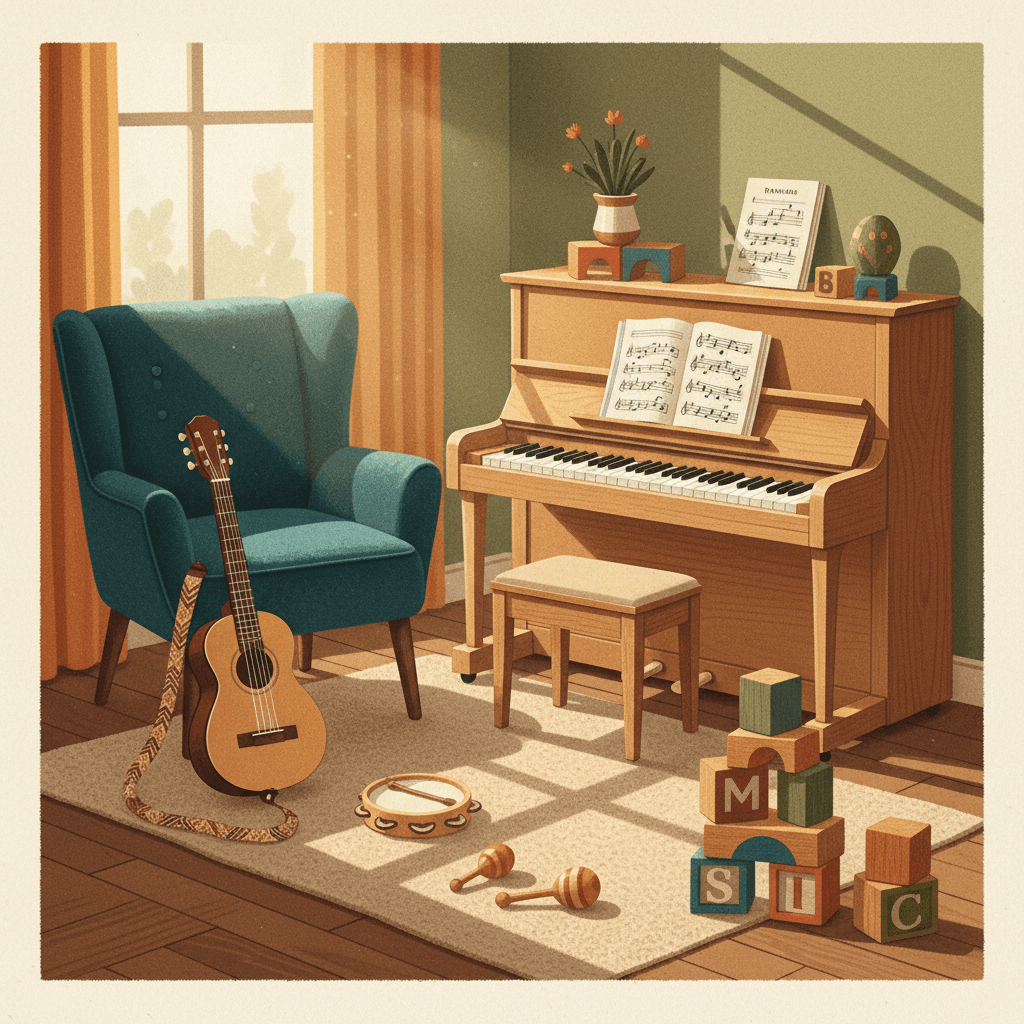
Kids Piano Lessons Near Me: Private & Group Lessons for Every Age
Find kids piano lessons near you in Newfoundland. Explore private and group formats, age-ready tips, and how to choose the right teacher for your child.
Looking for kids piano lessons near you in Newfoundland? Piano is one of the most accessible first instruments for children of any age, offering a clear visual layout, strong links to music theory, and lesson formats that fit every schedule and budget. This guide walks parents through age readiness, lesson types, and how to find the right teacher.
Why Piano Is a Wonderful First Instrument for Children
Think of the piano as a musical map: every note is visible, labelled, and laid out in a straight line. Unlike a violin or trumpet, where correct pitch is hidden inside embouchure or finger placement, the keyboard puts music theory right in front of a child's eyes from day one. That transparency makes learning feel achievable rather than mysterious. If you are exploring beginner-friendly keyboard and piano programs, you will quickly notice how consistently educators point to the piano's visual layout as a key advantage.
The piano's 88-key span gives children an immediate, physical picture of pitch relationships. Both hands begin developing independently from lesson one, building bilateral motor coordination that supports a wide range of future skills. The Royal Conservatory of Music in Canada uses piano as its default foundation instrument precisely because of these structural advantages.
How piano builds foundational music literacy faster than most instruments
Reading treble and bass clef simultaneously gives piano students a complete picture of music notation from the start. Most students at RCM Level 1 can sight-read simple melodies within 8 to 12 weeks of beginning lessons. That dual-clef fluency transfers directly to other instruments: understanding intervals on a keyboard makes picking up guitar lessons, ukulele, or voice study noticeably more straightforward. For a deeper look at starting points and milestones, see this Canadian parent's guide to getting started with piano.
What does learning piano do for a child's brain development and confidence?
Neurological research indicates that musical training before age 7 strengthens the corpus callosum, the bridge between the brain's two hemispheres. Fine motor coordination, working memory, and sustained attention all show measurable improvement with consistent music study. Perhaps most visibly, children build confidence quickly: playing a recognisable melody for family within the first few weeks creates a genuine sense of accomplishment that keeps curiosity alive.
Piano as a gateway to voice, ukulele, and guitar later on
Chord-theory knowledge transfers beautifully across instruments. A child who understands a C major chord on piano can locate it on a ukulele or guitar almost immediately, because the underlying theory is identical. Many students who begin with piano naturally expand into voice, piano, ukulele, and guitar as their musical confidence grows. Music notation learned at the piano also directly supports sight-singing, making the transition into voice lessons smoother and faster than starting from scratch. For more on this, see related industry context.
What Age Can Kids Start Piano Lessons?
Research from early-childhood music organisations suggests that children as young as 3 show measurable pitch-matching ability, yet most piano educators in Canada recommend starting formal lessons between ages 5 and 7, when fine motor control and attention span are stable enough to sustain structured practice. Age is a guide, not a gatekeeper: every developmental stage offers a genuine entry point.
| Age Range | Typical Readiness Indicators | Realistic First-Year Goals |
|---|---|---|
| Ages 4–6 | Responds to rhythm, can follow simple instructions, recognises melodies | Finger numbers, 3–5 note melodies, steady beat |
| Ages 7–10 | Mature pincer grip, reads simple text, sustained focus for 30+ minutes | Two-hand pieces, RCM Prep to Level 2, basic notation reading |
| Ages 11–14 | Strong working memory, self-directed learning emerging | RCM Level 2–4, pop and classical repertoire, early theory |
| Ages 15+ | Cognitive maturity accelerates concept uptake | Rapid beginner progression, chord-based styles, exam pathways |
Early childhood beginners (ages 4–6): what realistic progress looks like
Lessons for young beginners typically run 20 to 30 minutes to match shorter attention spans. Coloured keys, singing, and familiar songs take priority over notation in the earliest months, with reading introduced gradually as recognition grows. Progress at this stage is measured in engagement, ear development, and enthusiasm rather than exam grades. If you are searching for options, you can explore local piano lesson listings to compare what educators offer for this age group.
The sweet spot: why ages 7–10 often see the fastest early growth
Working memory and fine motor control converge meaningfully around age 7, creating a window of particularly fast early learning. Children in this range can typically hold a simple two-hand piece within 6 to 8 weeks of starting. They can read notation, follow multi-step instructions, and begin to self-correct with gentle guidance. RCM Preparatory Level through Level 2 is a realistic Year 1 goal. This cohort also responds enthusiastically to pop and film music woven in alongside classical repertoire, keeping motivation high across the full term.
Tweens, teens, and adult beginners: is it ever too late to start?
The worry that missing an early start is a permanent disadvantage is one of the most common concerns families bring to a first conversation, and it is largely unfounded. Adult and teens and adults learners progress through beginner piano lessons faster in many respects, because greater cognitive maturity allows them to absorb theory and pattern-recognition more quickly, even if fine motor development requires a little more patient repetition. Teens often arrive with strong musical intuitions built from years of listening and can learn chord-based pop piano with impressive speed. For learners of any age, explore adult music lessons at any skill level as a companion resource.
How lessons are tailored to each child's developmental stage
The first lesson serves partly as a relaxed assessment: finger strength, note recognition, rhythmic sense, and prior musical experience all shape the plan moving forward. Lesson content is adjusted term by term rather than locked to a rigid syllabus. Families receive brief written updates outlining current goals and what to focus on at home. Both small-group and private piano lessons are available, so the format can shift as a student's needs evolve. No child is hurried through material before it is genuinely secure. For more on this, see related industry context.
What Kind of Piano Lesson Actually Fits Your Child?
Some kids thrive with undivided one-on-one attention; others light up when they can play alongside a friend. Knowing the formats available helps you make a choice that sticks.
Lesson lengths run 30, 45, or 60 minutes depending on age and goals. Small-group classes are capped at 4 to 6 students so individual feedback remains meaningful. Group terms typically run 8 to 10 weeks, making scheduling predictable for busy families.
Musical styles available for kids teens and adults include:
- Classical (RCM repertoire)
- Pop and chart songs
- Folk and Newfoundland traditional music
- Film and video game soundtracks
- Original song exploration for advanced students
Private one-on-one piano lessons: personalized and flexible
One-on-one lessons allow a piano instructor to respond in real time to the specific technical challenges a child faces that week. Scheduling holds a consistent weekly slot, and lesson content adapts from session to session based on what was mastered at home. This format is ideal for students preparing for RCM examinations or pursuing particular repertoire goals. Find piano lessons near you across Canada to understand how private formats compare across different studios and regions.
Small-group piano classes: social, engaging, and budget-friendly
Children in small groups enjoy hearing their peers play, celebrate each other's small victories, and stay motivated through friendly participation. Groups are capped at a maximum of 6 students, preserving the quality of individual feedback. The term-based format provides a clear week-by-week curriculum with consistent pacing. Cost per session is more accessible than private piano lessons, making music education available to more families across the community. If you want to compare local kid-focused piano instructors, reviewing group and private options side by side is a useful starting point.
What styles can kids explore: classical, pop, and beyond?
Piano lessons do not lock students into a single genre. Classical RCM repertoire builds technique and discipline; pop and film music sustains motivation between exam cycles; traditional Newfoundland folk repertoire connects children to the local musical community in a meaningful way. Advanced students may begin exploring simple original composition as their theory understanding deepens. The style list above reflects the full range on offer, and repertoire choices are revisited collaboratively each term.
How to Choose the Right Piano Teacher for Your Child
A parent in St. John's once described her daughter's first piano teacher as "technically brilliant but terrifying." The child quit after three months. Her second teacher was warm, patient, and genuinely curious about what music the girl loved, and that child played piano for the next seven years. Credentials matter, but so does the human in the room.
Teacher-student rapport is widely recognised as the strongest predictor of sustained music study beyond Year 1. Look for teachers with recognised training such as an RCM Certificate, ARCT, or university music degree. A trial lesson of around 30 minutes is standard practice before committing to a full term.
What qualifications and experience should you look for?
- Formal music training (RCM ARCT, university degree, or equivalent)
- Experience specifically with children of your child's age group
- Familiarity with at least one graded examination system (RCM, Conservatory Canada)
- Clear communication with parents about progress
- Criminal record check or equivalent, standard for educators working with minors in Newfoundland
Understanding what structured piano programs typically include helps you ask informed questions when evaluating a prospective teacher's approach.
Why a nurturing, encouraging teaching style matters as much as credentials
Piano lessons involve repeated correction by their nature. A child who feels genuinely safe making mistakes will practise more willingly at home and return to lessons with greater openness. A positive lesson atmosphere looks like specific praise ("your left hand stayed steady there"), manageable challenge, and the occasional shared laugh. Research in music education consistently associates authoritarian or fear-based teaching with early dropout, regardless of how technically skilled the teacher may be. Encouragement is not softness; it is strategy.
Questions to ask before booking a first lesson
- What experience do you have teaching children this age?
- Which repertoire or method books do you use?
- How do you communicate progress to parents?
- What is your policy if my child wants to try a different style?
- Do you offer a trial lesson?
- Are lessons held at a fixed location, or do you travel to students?
How lesson planning works for young learners
Every lesson begins with a brief warm-up, either scales or a familiar piece the student already enjoys. One new concept is introduced per session so the learning feels manageable rather than overwhelming. The lesson closes with something the student genuinely loves playing, ending on a positive emotional note. Parents receive a short weekly written summary covering what to practise and why. Repertoire is chosen collaboratively with the student wherever possible, and curriculum progresses through RCM levels without rigid exam pressure unless the family specifically requests an examination pathway. Visit the site to explore the full range of instruments and formats available.
What to Expect From Kids Piano Lessons: A Parent's Guide
The first piano lesson is rarely about the piano. It is about trust, between teacher and student, and between the learning process and the family. Understanding what actually happens in those early sessions helps parents set realistic expectations and become their child's best practice partner.
A typical first lesson runs 30 minutes for children under age 8. Most beginners can play a simple recognisable melody within 2 to 3 lessons. Recommended home practice for ages 6 to 8 is 10 to 15 minutes per day, five days per week, and consistent short sessions produce far better results than occasional long ones.
What happens in a typical first lesson?
The first 5 minutes are devoted to introductions and genuine rapport-building: teacher and student learn a little about each other's musical interests. The child then explores the keyboard layout and locates middle C. A simple rhythm is clapped together. A short 3-note melody is played by ear. The session closes with a brief parent conversation about realistic home-practice goals. The emotional tone set in this first meeting shapes how willingly a child returns for lesson two, which is why experienced teachers invest in it so deliberately.
How much should my child practise at home each week?
Age-banded guidance makes this practical rather than vague. Children aged 5 to 7 benefit most from 10 minutes daily; ages 8 to 11 should aim for 15 to 20 minutes daily; students aged 12 and older can sustain 20 to 30 minutes daily with benefit. Consistency matters far more than duration: five short sessions across the week outperform a single long weekend session in terms of retention and skill-building. Practice journals help children track their own streaks and feel ownership over their progress. For a broader look at scheduling, read more about how often kids should have music lessons.
How parents can support progress without adding pressure
Supportive involvement looks like sitting in occasionally, celebrating small wins enthusiastically, and keeping the practice space inviting and low-stakes. Counterproductive pressure looks like criticising wrong notes, comparing siblings, or using practice as a punishment. Positive parental engagement during the first 6 months is strongly associated with continued enrolment. The single most useful question a parent can ask after a lesson is "what did you learn today?" rather than "did you practise?" The first opens a conversation; the second creates anxiety.
Lesson Fees, Scheduling, and How to Get Started in Newfoundland
Music instruction in Newfoundland has long been woven into community life, from church choirs to kitchen parties, and access to structured, affordable private lessons has expanded significantly in recent decades. Today, families across the Avalon Peninsula have more options than ever for quality kids and adults piano instruction close to home.
| Lesson Length | Best Suited For | Approx. Session Focus |
|---|---|---|
| 30 min | Young beginners ages 4–7 | One concept plus one short piece |
| 45 min | Ages 8–12 building repertoire | Technique, two pieces, brief theory |
| 60 min | Teens and adults, advanced students | Full repertoire review, theory, sight-reading |
Scheduling runs in 8 to 10 week terms, which keeps the academic calendar predictable for families. The Avalon Peninsula includes communities such as St. John's, CBS, and surrounding towns, and lessons are available across this region. Families are welcomed to reach out directly by email to discuss scheduling, preferred lesson format, and current level to find the right fit before the term begins.
Key Takeaways
- Piano is uniquely beginner-friendly because its 88-key layout makes pitch relationships and music theory immediately visible to young learners.
- Children can begin formal lessons as early as age 4, with the 7 to 10 age window typically showing the fastest early progress due to converging fine motor and cognitive development.
- Both private and small-group formats are available across the Avalon, with group classes offering a more accessible entry point for budget-conscious families.
- Choosing a teacher with both solid credentials and a warm, encouraging style is the most reliable predictor of a child staying in lessons past Year 1.
- Consistent short daily practice, supported by positive parental engagement, matters more than any single long session.
FAQ
Are piano lessons suitable for very young children, such as age 4 or 5?
Yes, with the right approach. Lessons for ages 4 to 5 typically run 20 to 30 minutes and focus on listening and rhythm activities, recognising and singing notes before reading them, and playing short melodies using finger numbers rather than formal notation. Progress at this stage is measured in enthusiasm and ear development. Formal reading and exam preparation come later, once fine motor control is more established.
How long does it take a beginner child to play a recognisable song?
Most children can play a short, recognisable 3 to 5 note melody within their first 2 to 3 lessons. A simple two-hand piece with a steady rhythm typically follows within 6 to 10 weeks, depending on home practice consistency and the child's age. Managing expectations around early milestones helps families stay encouraged rather than frustrated during the foundational phase.
What is the difference between a keyboard and a piano for beginner lessons?
For lesson purposes, both a weighted-key digital keyboard and an acoustic piano provide a suitable learning surface, provided the keyboard has a full set of keys and touch sensitivity. The pedagogical content, including technique, notation, and theory, is identical on both. Teaching focuses on the educational experience rather than instrument specifications, and can advise families on what is appropriate for their child's current stage.
Do kids teens need to do RCM exams, or can they just learn for fun?
RCM examinations are optional, not required. Many students follow the RCM curriculum as a structured pathway while never sitting a formal exam. Others use exam goals as motivating milestones. The choice depends on the family's priorities and the child's temperament. A good piano instructor will discuss both paths openly and adjust the plan if the family's preference changes mid-term.
Can a child switch from beginner piano to guitar lessons or voice later?
Absolutely. Piano study builds a strong foundation in music theory, notation reading, and ear training that transfers directly to guitar, ukulele, and voice. Many students find the transition to a second instrument noticeably faster after a year or more of piano. Instruction in all four instruments means students can expand their musical range at whatever pace suits them.