Music Lessons in St. John's, Newfoundland for All Ages
Find private music lessons in St. John's, NL for kids, teens, and adults. Learn piano, guitar, voice, drums, and more, in-person or online.
St. John's, Newfoundland offers a rich setting to begin music lessons, whether you are a young child picking up the ukulele or an adult finally starting guitar. Private lessons in piano, voice, guitar, drums, and more are available in-person and online, tailored to every age and skill level.
Why St. John's Is a Wonderful Place to Start Your Music Education
Five centuries ago, the first European settlers arrived on the shores of what would become St. John's, and many of them carried fiddles, accordions, and songs in their luggage. That deep cultural inheritance, stretching back over 400 years of folk ballads, jigs, reels, and sea shanties, makes this city an unusually rich place to begin learning an instrument or voice. MusicNL, the provincial music industry association, actively supports local artists today, and the city hosts multiple annual festivals celebrating folk and Celtic traditions. Learning music here means joining a living, breathing cultural conversation that started long before any of us arrived.
A Living Musical Tradition in Newfoundland and Labrador
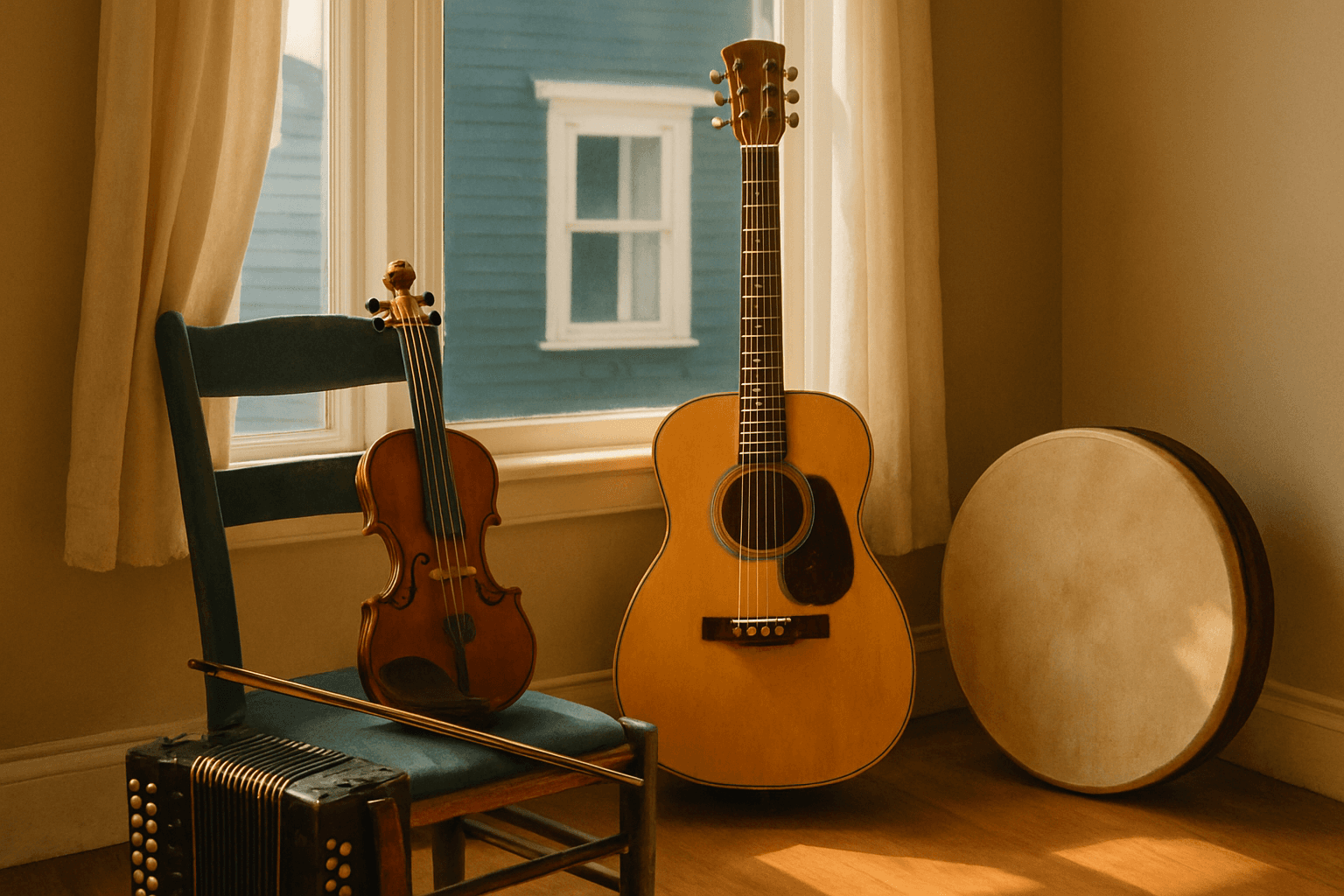
Newfoundland's musical roots run deep into Irish and English folk culture, with the fiddle, accordion, tin whistle, and guitar forming the backbone of the province's sound. These instruments are still played in pubs, kitchens, and community halls across the island every weekend. Alongside that traditional tradition, rock-influenced bands emerging from St. John's have put the city on Canada's national music map in recent decades. When a student learns music here, they are not simply acquiring a skill; they are stepping into a 400-year-old conversation. School of Rock St. John's is one recognized structured program with a local presence, offering a complementary approach for students drawn to contemporary genres.
How Local Culture Makes Music Learning More Meaningful for Kids and Adults
Research in music pedagogy consistently finds that culturally anchored learning improves both motivation and long-term retention. When students connect their repertoire to music they hear in their own community, skill progression tends to accelerate. This applies whether you live in downtown St. John's or in Mount Pearl and the surrounding areas, which form an integral part of the broader regional music community. Both children and adult learners benefit when lesson material reflects a familiar musical identity. Choosing a teacher who understands your local musical context is one of the most practical decisions a family can make at the start of a music education journey.
Instruments You Can Learn at Our St. John's Music Academy
The instrument you choose on day one matters far less than most people think; what matters is that you start. Our school of music offers five core instrument categories: piano, guitar and bass, voice, ukulele and accordion, and drums. Each one opens a different door into music, and none requires prior experience to begin. Here is a quick overview before we go deeper:
- Piano, ideal for children under 10 and adult learners who want a strong theory foundation
- Guitar, the most-requested instrument across all ages; suits rock, folk, and pop
- Bass Guitar, often overlooked, yet builds rhythm skills quickly for aspiring band members
- Voice, available for ages 7 and up, teens, and adults at all levels
- Ukulele, accessible for young children and beginners with four strings and a gentle learning curve
- Accordion, central to Newfoundland's kitchen party tradition
- Drums, builds coordination, timing, and bilateral motor skills from age 5
Piano Lessons, Building a Strong Foundation at Any Age
Piano is the most commonly requested first instrument for children under age 10, and for good reason. The keyboard lays out scales, chords, and intervals as a visual map, making abstract music theory immediately concrete. Studies in child development suggest that piano study supports fine motor coordination in children as young as 4 years old, and the same visual logic that helps young beginners also benefits adult learners returning to music later in life. If you are wondering about timing, our guide on the best age to start piano lessons walks through the developmental milestones in detail.
Guitar and Bass Guitar Lessons for Beginners to Advanced Players
Guitar is the dominant instrument in rock, folk, and pop, and all three genres are strongly represented in St. John's. We teach acoustic, electric, and bass guitar across all skill levels. Bass guitar, in particular, is ideal for students drawn to band performance; it builds foundational rhythm awareness quickly and is often underestimated as a starting instrument. Most beginner students form their first recognizable chord within the first two lessons, which gives early momentum. If you are still deciding between ukulele or guitar as your first instrument, that guide offers an honest, side-by-side comparison.
Voice Lessons, Developing Breath, Range, and Confidence
The voice is unique because the instrument lives inside the body. Lessons begin with diaphragm support and breath control, then move into resonance, registration (chest voice versus head voice), and range development. Vocal cords are muscle tissue, and like any muscle group, they respond to consistent, structured training. Voice lessons are available for children aged 7 and up, teens, and adult learners at all experience levels. Beyond technical musical proficiency, lessons build confidence in performance contexts that carries into everyday life. For a clear preview of the journey, read what to expect from voice lessons before booking.
Ukulele and Accordion Lessons, Celebrating Newfoundland's Folk Roots
The ukulele's four strings and compact size make it one of the most accessible instruments for younger children and adult beginners. The accordion, by contrast, sits at the heart of Newfoundland's kitchen party tradition and connects students directly to the province's Celtic heritage. Learning either instrument is a bridge between personal music study and genuine cultural participation. Many students performing folk-style songs find they can share a simple tune at a family gathering within the first three months of study, which is a powerful motivator early in the learning process.
Drum Lessons, Rhythm, Motor Skills, and Musical Timing
Drumming simultaneously engages both hemispheres of the brain and builds bilateral coordination in a way few other activities do; this is well-documented in music education research. Drum lessons suit students as young as age 5 when properly sized equipment is used. The rhythm awareness developed through drumming transfers directly into every other instrument, making it a surprisingly strong foundation for overall musicianship. Both rock bands and folk ensembles in St. John's rely on skilled drummers, so the community need is real. Lessons work on an acoustic kit or an electronic kit, which is worth knowing for students living in apartments. Motivated drum students are often fast-tracked into a band performance program once basic coordination is established.
Who Are These Music Lessons For? Skill Levels, Ages, and Adaptive Learning
Whether you are a seven-year-old picking up a ukulele for the first time or a 45-year-old who always meant to learn guitar but never quite started, is it really too late, or too early? The honest answer is neither. Private lessons work across a wide range of ages and skill levels, and the structure adapts to each learner rather than the other way around.
| Learner Profile | Recommended Starting Age | Suggested Instrument | Lesson Format |
|---|---|---|---|
| Young Child | Age 4+ | Piano, Ukulele | 30-minute, in-person |
| Teen Beginner | Age 12+ | Guitar, Voice, Drums | 45-minute, in-person or online |
| Adult Beginner | Any age | Piano, Guitar, Voice | 45-minute or 60-minute, flexible |
| Intermediate Student | Any age | Any instrument | 45-minute with theory focus |
| Advanced Student | Any age | Any instrument | 60-minute with RCM or festival prep |
Adults make up a growing share of music students, and children can begin structured lessons as early as age 4 for piano and ukulele, or age 7 for voice. Shine Music is a St. John's provider worth knowing about for families seeking adaptive and inclusive music instruction.
Can Complete Beginners Join Without Any Prior Experience?
No prior experience is needed, and this is worth saying plainly. The first lesson focuses on posture, instrument familiarity, and one simple concept: a single note, a single chord, or a single breath exercise, depending on the instrument. Many students find they can play a recognizable melody within four to six weeks of consistent weekly lessons and daily practice, though individual timelines vary. The goal of those first sessions is to build comfort and curiosity, not to rush toward performance.
How Lessons Are Structured for Intermediate and Advanced Students
Intermediate and advanced lesson plans layer in music theory, sight-reading, repertoire development, and performance preparation in a single cohesive program. Advanced students may work toward Royal Conservatory of Music (RCM) examinations or prepare for local festival performance. Before designing a program, the music teacher reviews a student's current repertoire in an initial assessment to understand where they are and where they want to go. This ensures that every session at our school builds on real, measurable progress rather than repeating ground already covered.
Music Programs Designed for Young Children, Teens, and Adult Learners
Lesson pacing and repertoire shift meaningfully across age groups. Young children benefit from shorter 30-minute sessions with game-based reinforcement woven throughout. Teens respond well to contemporary material, including popular rock songs, film scores, and pop, alongside clear performance goals that give learning a sense of direction. Adult learners thrive with goal-oriented lesson plans and the freedom to choose repertoire that genuinely interests them. For guidance on scheduling, the guide on how often kids should have music lessons is a useful starting point for families. Adult learners beginning with voice can also explore the dedicated resource at voice lessons for adult beginners.
Adaptive Music Education, Lessons for Students of All Abilities
Adaptive music education means adjusting pace, materials, and the sensory environment to meet each learner's individual needs. Music instruction has been shown to support cognitive and emotional development in students with autism spectrum disorder, ADHD, and a range of other learning differences. Adaptive teaching does not lower expectations; it reframes them so that every student can experience genuine progress. The instructor prepares individually for each student, and parents are warmly encouraged to share relevant background information before the first lesson so the teaching approach can be thoughtfully calibrated from the very first session.
In-Person and Online Private Music Lessons in St. John's
Choosing between an in-person lesson and an online session is a bit like choosing between a printed book and an e-reader: the knowledge transferred is the same, and what changes is the environment and the tools. Both formats deliver genuine results when the lessons are consistent and well-structured.
For families who prefer face-to-face instruction, Making Music Academy is an example of a local St. John's academy offering in-person private lessons. Online lessons, meanwhile, eliminate commute time, which for families outside the downtown core can save 20 to 40 minutes per session, a meaningful difference across a school year.
What Happens During a Typical Private Music Lesson?
A well-structured 30-minute private lesson follows a clear arc that keeps the student engaged and productive from start to finish:
- Warm-up and technique review (5 minutes): scales, posture check, or breath exercises depending on the instrument
- Repertoire practice with teacher feedback (15 minutes): the student plays prepared pieces and receives specific, actionable guidance
- Introduction of a new concept or piece (7 minutes): one new idea is presented so the student leaves with something fresh to explore
- Assignment setting and practice tips (3 minutes): the teacher outlines exactly what to practise before the next session
This structure applies across piano, guitar, voice, and other instruments. For a deeper comparison of formats, visit our guide on online vs in-person music lessons.
Are Online Music Lessons as Effective as In-Person Sessions?
For most instruments and skill levels, the honest answer is yes, provided the setup is right. Research and practitioner experience suggest that online lessons can approach 85 to 90 percent of the effectiveness of in-person sessions when conducted over high-quality video with a good instrument and stable connection. The main exceptions are very young children under age 6, who often benefit from the tactile guidance an in-person instructor provides, and drum students, where audio latency can complicate timing feedback. Consistent weekly scheduling remains the single biggest predictor of progress, regardless of whether lessons happen in a studio or over a screen.
How Virtual Classes Work, Tools, Scheduling, and What to Expect
Getting set up for online lessons is straightforward. A student needs a device with a working camera, a stable internet connection, and their instrument positioned so the teacher can see both hands and the instrument clearly. Zoom or a similar platform is commonly used. Lessons are scheduled at a consistent weekly time, which matters for motor-skill habit formation. Sheet music and exercises are shared digitally before or after each session, and lesson confirmations and materials arrive by email so nothing gets lost. Parents find it easy to sit in on online sessions, which is especially helpful for younger children who benefit from a supportive adult nearby.
Music Lesson Rates, Scheduling, and How to Get Started
Private music instruction in Canada typically ranges from $40 to $90 per hour depending on the instructor's experience, location, and lesson format, making it one of the most personalized forms of education available at a comparable price to academic tutoring. In St. John's specifically, rates are generally accessible relative to larger Canadian cities.
| Lesson Length | Best For | Approximate Rate Range | Weekly Practice Recommended |
|---|---|---|---|
| 30 minutes | Children under age 8, absolute beginners | $25 to $45 | 10 to 15 minutes daily |
| 45 minutes | School-age children, motivated beginners | $35 to $65 | 15 to 20 minutes daily |
| 60 minutes | Advanced students, adult learners | $50 to $80 | 20 to 30 minutes daily |
What Does a Weekly Private Music Lesson Cost in St. John's?
Private lesson rates in St. John's typically range from $40 to $80 for a 45-minute session, varying by instrument, instructor experience, and whether the lesson is in-person or online. It is worth asking about monthly billing versus per-lesson billing when you first reach out, since monthly arrangements often provide better scheduling consistency. Many teachers, including independent instructors outside a formal school or rock academy setting, offer an introductory lesson at a standard or slightly reduced rate so both teacher and student can assess fit before committing.
Lesson Length Options, 30-Minute, 45-Minute, and Hour Lesson
Young children's attention spans and physical endurance genuinely favour 30 minutes; pushing beyond that can erode the positive association with practice. Forty-five minute lessons suit school-age children and motivated adult beginners who have specific repertoire goals. A full 60-minute session gives advanced students and adults the time to work through technique, theory, and repertoire in a single sitting without feeling rushed. Beyond lesson length, research in motor-skill development supports spaced repetition, meaning daily 10 to 15 minute home sessions contribute more to progress than lesson duration alone. For practical guidance on structuring home practice, our article on building a consistent practice schedule is a helpful companion.
Gift Cards and Flexible Scheduling for Busy Families
Gift cards make a thoughtful and practical option for birthdays, winter holidays, or a first-lesson gift for someone who has been putting it off. Evening and weekend scheduling ensures that working parents and students with full school calendars can participate without disruption to their week. Summer lessons are available as well, which matters for families who want their student to maintain momentum through the break rather than starting from scratch each September. A band program interest, a Canada-wide competition goal, or simply a desire to play for personal joy: all of these are valid starting points, and scheduling can flex around whichever fits your life.
How to Contact Madison Curtis, Your St. John's Music Teacher
One parent recently wrote to say she had been meaning to book a lesson for her daughter for eight months, and the only thing stopping her was not knowing where to start. Here is exactly where to start.
Madison Curtis is a qualified music teacher serving students across St. John's and online throughout Canada. Training includes studies that draw on both North American and United Kingdom pedagogical traditions, bringing a broad perspective to every lesson. Influences also include methodologies developed near the Memorial University of Newfoundland, which has long supported music education and performance in the province.
Reaching out is simple. You can email teacher leave review feedback or an initial inquiry through the contact form on the site, and you can also leave review St. John teachers at relevant directories once you have had your first session. When you send a message, include your child's age or your own experience level, the instrument you are interested in, and whether you prefer in-person or online lessons. This helps prepare a thoughtful reply.
Response time for email inquiries is typically within one business day. A first lesson can generally be scheduled within one to two weeks of initial contact. The site's privacy policy covers how your contact information is handled, and you are welcome to read it before reaching out.
The Madison Curtis home page has everything you need to get started, and the blog is full of guides to help you prepare for your first lesson with confidence.
Key Takeaways
- St. John's has a rich 400-year folk and musical tradition that gives lessons extra cultural depth and meaning for students of all ages.
- Five core instrument categories are available: piano, guitar and bass, voice, ukulele and accordion, and drums, each suited to different ages and goals.
- Both in-person and online private lessons are effective; consistent weekly scheduling matters more than format for long-term progress.
- Rates for a 45-minute private lesson in St. John's typically range from $40 to $80, with 30-minute sessions recommended for younger children.
- No prior experience is needed to begin; lessons adapt to complete beginners, intermediate players, advanced students, and learners of all abilities.
FAQ
What age can my child start music lessons in St. John's?
Children can begin structured lessons as early as age 4 for instruments like piano and ukulele, which suit small hands and short attention spans well. Voice lessons are generally recommended from age 7, when the vocal mechanism is ready for guided training. Drums can begin around age 5 with properly sized equipment. The most important factor is the child's interest and willingness to engage, not a precise birthday.
Is it worth taking music lessons as an adult beginner?
Absolutely. Adults make up a meaningful share of private music lesson students across Canada, and adult learners often progress efficiently because they bring focus, clear goals, and genuine motivation. The brain retains strong capacity for musical learning throughout adulthood. A 45-minute or 60-minute weekly lesson, paired with daily short practice sessions, produces real and satisfying results for adult beginners on any instrument.
How do online music lessons work for young children?
For children aged 6 and up, online lessons work well with a device positioned to show the instrument and hands clearly. A parent or caregiver sitting nearby during the session makes a significant positive difference, especially in the first few weeks. The teacher sends materials by email and adjusts pacing based on what the child can absorb on screen. Children under age 6 generally benefit more from in-person tactile guidance.
Do I need to buy an instrument before the first lesson?
For most instruments, having access to the instrument at home is important for daily practice, which is where real progress happens. That said, you do not need to purchase immediately; rental options are available through local music retailers. Discuss this with your teacher before the first session to get a recommendation suited to your budget and the specific instrument you are learning.
How long does it take to learn a song on guitar or piano?
Many students can play a simple, recognizable melody within four to six weeks of consistent weekly lessons and short daily practice. A full song with chords and a clean arrangement typically takes two to three months for a beginner, depending on the complexity of the piece and the regularity of practice. Progress varies by individual, but structured private lessons are the most direct path to playing real music in a reasonable timeframe.