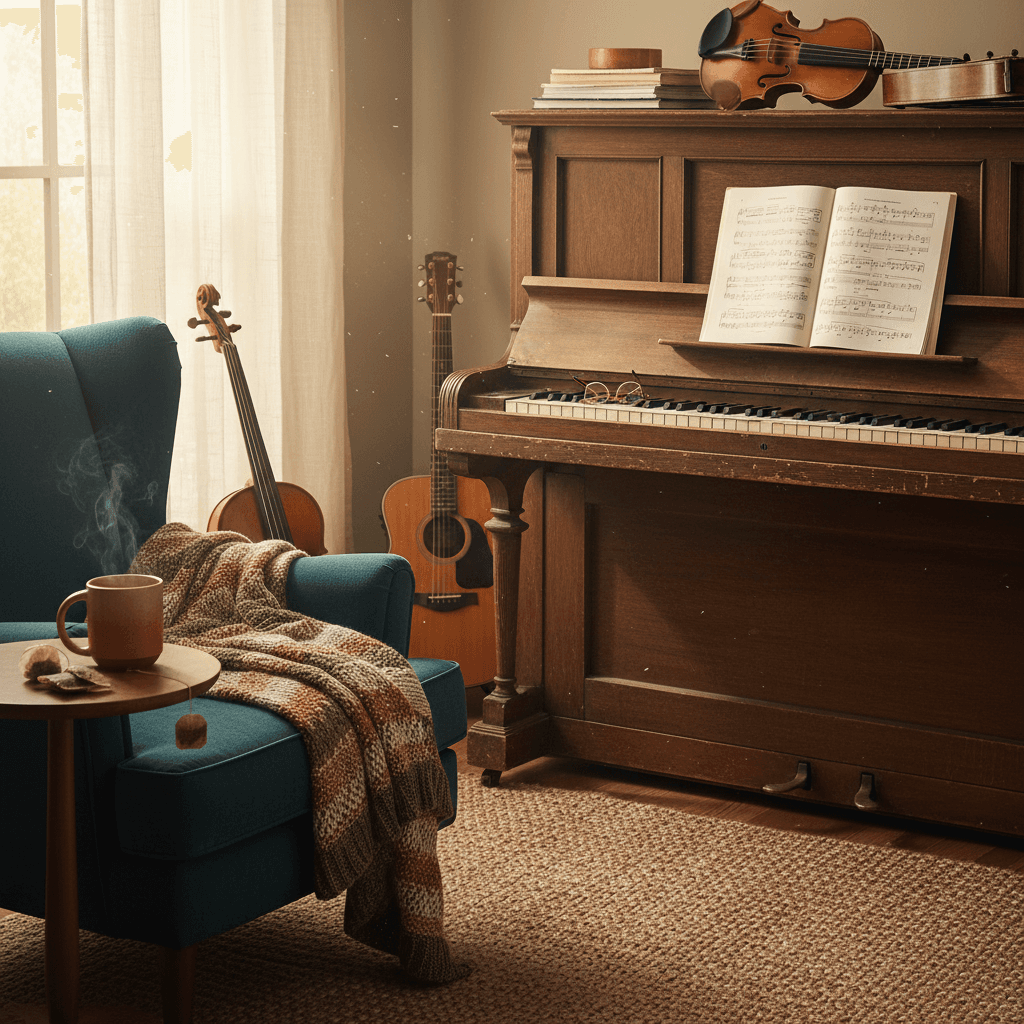
Piano Lessons for Seniors: Benefits, Getting Started, and What to Expect
Discover how piano lessons help seniors boost memory, ease stress, and find joy. Learn what to expect, how often to practise, and how to get started today.
Piano lessons offer seniors real, measurable benefits: sharper memory, reduced stress, improved hand coordination, and genuine daily joy. Research confirms the brain keeps forming new pathways well into your 70s and 80s, meaning it is never too late to start. With the right teacher and a repertoire you already love, progress arrives faster than most beginners expect.
Why It's Never Too Late to Start Learning Piano
Research published over the last decade shows that adults over 60 who engage in structured musical training demonstrate measurable improvements in processing speed and working memory within as few as 6 months. If you've ever thought the piano was "for younger people," that finding alone is worth sitting with.
What does research say about cognitive benefits of learning piano as a senior?
Neuroplasticity, the brain's ability to form new neural pathways, persists well into older adulthood. At 60, 70, and beyond, your brain is still capable of genuine structural change. Piano engages the motor cortex, auditory cortex, and prefrontal cortex simultaneously, making it one of the most cognitively demanding and rewarding activities available. Resources covering learning piano at senior age confirm that measurable gains in attention and working memory can appear after just 6 months of consistent practice. Learning piano at any age activates more regions of the brain at once than almost any other single activity.
How piano lessons support memory, stress relief, and emotional wellbeing
Learning a new song requires both short-term memory (holding the next note in mind) and long-term memory (ingraining patterns over repeated practice). That dual activation is genuinely beneficial. Focused musical practice also functions much like mindfulness: your attention narrows, background worries recede, and the nervous system settles. Even 15-minute daily sessions can influence mood in a positive direction. Music carries emotional resonance tied to personal life memories, so reconnecting with a melody from your past is not just pleasant; it is psychologically nourishing.
The social rewards of music-making in your later years
Playing piano doesn't have to be a solitary pursuit. Small-group class formats allow seniors to share the joy of music-making with peers, which meaningfully reduces social isolation. Social disconnection affects a significant share of older Canadians, and music-making in a group setting is one of the most natural antidotes. Playing for family members at home carries its own warm reward. To explore group and individual options close to home, visit music lessons for adults in Newfoundland. For more on this, see related industry context.
Real Benefits of Piano Lessons for Older Adult Beginners
Picture a retired schoolteacher in her late 60s sitting at an upright piano for the first time, hands a little unsure, but playing the first four bars of a song she's hummed her whole life. That moment, specific, joyful, entirely achievable, is exactly what piano lessons are designed to create for older beginners.
Four concrete benefits of piano lessons for seniors include improved hand-eye coordination, mood and stress relief, memory engagement, and a sense of creative accomplishment.
Fine motor engagement and hand coordination through playing the piano
Playing the piano uses both hands independently, which strengthens the neural pathways governing dexterity and fine motor control. In early lessons, exercises are carefully adapted for older hands; no fast or forceful playing is required. Finger independence develops gradually over weeks, not days, and that gradual progression is exactly right for maintaining dexterity well into your 70s and 80s.
How music learning builds confidence at any age
Adult learners thrive when they experience small, clear wins early. Learning one complete musical phrase before moving to the next builds genuine confidence rather than manufactured encouragement. Adult students who set achievable goals report higher satisfaction and stay with lessons longer. Progress is measured by personal milestones: your first complete melody, your first song playing the piano hands together. There is no comparison to other students, no test, no grade.
Can learning piano genuinely reduce stress and improve mood?
The focused-attention state that happens during playing the piano functions similarly to a mindfulness practice. Research points to cortisol reduction associated with musical engagement, though results vary by individual. What is consistent is the experience many adult learners describe: sitting at the keys, the day's worries genuinely quiet down. Playing music you love also activates the brain's reward system in a direct, pleasurable way. These are strong tendencies, not certainties, but they are well worth exploring.
Musical joy as a daily health practice
Framing daily piano time as part of a healthy routine, alongside walking and social connection, shifts it from a hobby into genuine self-care. Even 10 to 15 minutes at the piano each day is meaningful. Build repertoire around songs you love, ensuring that practice time feels enjoyable rather than obligatory. Within the Avalon community, that connection to music you already carry in your heart is a powerful starting point. For more on this, see related industry context.
Choosing the Right Approach: Teaching Methods That Work for Seniors
What makes a piano method truly work for a senior learner, and why do so many adults quit within the first 3 months when the approach isn't right? The honest answer is that method matters enormously, and not all methods are designed with older adults in mind.
Comparison: Private Lessons vs. Small-Group Classes for Senior Beginners
| Format | Pacing | Social Element | Cost Range | Best For |
|---|---|---|---|---|
| Private lessons | Fully customised | One-on-one with teacher | Higher per session | Personalised goals, physical needs |
| Small-group classes | Group-set pace | Peers learning together | More affordable | Community, accountability |
How do senior piano students learn differently than children?
Adults rely more heavily on declarative memory, understanding and reasoning, while children often absorb procedural skills through repetition without needing explanation. An adult learner asks, "Why does this fingering work?" A child simply tries it. That curiosity is a strength. It means lessons can be richer, more conversational, and more meaningful. Lesson pacing is adjusted to honour the adult learning style, with clear explanations tied to every technique introduced.
Why a repertoire-first approach motivates adult and senior beginners
Starting with a song the student already loves creates immediate emotional buy-in. Traditional method books often delay satisfying music for weeks, which discourages adult beginners. Build early lessons around student song choices, so you play a real song within the first session. That early success changes everything about how you feel walking away from your first lesson.
Balancing music theory and practical playing from the very first lesson
Music theory and notation are introduced gradually, always tied directly to the music being played rather than taught in the abstract. A chords-based approach is one valid entry point, particularly for students who want to accompany singing quickly. Reading music is a long-term skill that develops alongside ear-based and chord-based playing; neither path is superior for every learner. For more on what adult lessons look like in practice, see piano lessons for adults.
The role of a supportive, patient teacher in your musical journey
The teacher-student relationship is the most important variable in adult learning success. A patient teacher adjusts content to the learner's pace, physical comfort, and personal goals without making the student feel behind. The right approach is warm and encouraging by design; lessons are a conversation, not a performance. The right teacher makes you feel capable from the very first session.
Private lessons versus small-group classes: which suits you best?
Private lessons offer maximum customisation: pacing, repertoire, physical adaptations, and goal-setting are all built around you. Small-group classes add community, shared laughter, and gentle accountability that many seniors find deeply motivating. Both formats are available, with weekly lessons offered across the Avalon. Lesson fees vary by format and duration, so discussing options directly with your teacher is the clearest path to finding the right fit. For local options, explore piano and voice lessons near me in Newfoundland.
Your First Piano Lesson as a Senior, What to Expect
Your very first piano lesson as a senior should feel nothing like school, and if it does, something is wrong. A good first lesson is calm, curious, and encouraging from start to finish.
What happens in a beginner piano lesson for older adults?
A typical first lesson runs 30 to 45 minutes and follows a natural sequence:
- Brief goal conversation: your teacher asks what you hope to play and why.
- Posture and bench height: physical comfort is established before a single note is played.
- Finding notes by landmark: Middle C, groups of 2 and 3 black keys.
- Playing a short melody or chord: you make real music in the very first session.
- A simple home-practice task: one small thing to explore before next week.
No prior knowledge is needed. None at all.
Setting realistic, encouraging goals from day one
Goals are always set collaboratively. Examples might include "play Happy Birthday by the end of month 2" or "learn the first verse of a favourite hymn." These goals evolve naturally as your skills grow, and each step forward is acknowledged. The right teacher acts as a guide and a cheerleader, not a taskmaster. Learning is celebrated at every level, and your pace is the right pace.
How comfort and enjoyment are built into every session
Physical comfort matters: bench height, keyboard position, and brief warm-up stretches are all part of the routine. Emotional comfort matters equally; there are no timed tests, no judgment, and mistakes are treated as information rather than failure. Students who prefer to learn from home can access live online piano lessons, which offer the same warm, structured experience without requiring travel. Community discussions reflect how widely seniors are embracing the online lesson format with great success.
How Often Should Seniors Take Piano Lessons and Practise?
Learning piano is a bit like growing a garden: it's the consistent daily attention, even just a few minutes, that produces the most beautiful results, not one heroic session each week.
Is a 30-minute, 45-minute, or 60-minute lesson better for seniors?
For complete beginners, especially those managing fatigue or arthritis, 30-minute weekly lessons are the right starting point. They hold focus without draining energy. Once engagement is established, 45 minutes becomes a natural and comfortable step-up. Sixty-minute lessons suit intermediate students with strong focus and a full repertoire to work through. All three are legitimate options; the best choice depends on your energy, goals, and available time.
Building a manageable weekly practice routine that actually sticks
Consistency matters far more than volume. Here is a simple five-step approach:
- Choose a consistent time of day: morning with coffee, or after lunch.
- Keep sessions to 15 to 20 minutes.
- Focus on one small thing: one hand, one phrase, one transition.
- End on something you already know and enjoy.
- Log practice in a small notebook to track your progress.
Practice guides are provided for all students, making this method easy to follow from the very first week.
How steady progress compounds over months, even with short sessions
Each short session builds directly on the last. After 3 months of consistent practice, most students can play 2 to 3 complete songs with real confidence. The compounding nature of musical skill development means that age is far less relevant than consistency. Please don't compare your pace to a younger learner's; your progress is meaningful on its own terms. For more on how timing affects musical development, see best age for piano lessons.
Songs and Repertoire Seniors Love to Learn on Piano
The songs that shaped your musical life, the melodies from a childhood radio, a favourite hymn, a tune from a first dance, have been waiting at the piano keys your whole life. Learning to play them is not a small thing.
Suggested starter repertoire for senior beginners includes classical pieces such as Ode to Joy, Minuet in G, and simplified Für Elise; popular songs such as Yesterday and What a Wonderful World; and folk and hymns such as Danny Boy, Amazing Grace, and local Newfoundland folk melodies.
Why playing music you already love accelerates learning
Familiar songs are learned considerably faster than unfamiliar material in adult learners, and the emotional connection to a beloved piece sustains motivation through the difficult passages. Every new student is asked about their favourite songs in the very first lesson. When you love the music you're practising, you learn more quickly, more deeply, and with far more joy.
Accessible classical pieces perfect for beginner senior students
Classical beginner pieces offer a natural entry into both reading music and music theory alongside musical expression. Ode to Joy works beautifully as a single-hand melody before adding the left hand. Minuet in G (attributed to Bach and Petzold) has a gentle, repetitive phrase structure that suits older hands well. A simplified opening to Für Elise is achievable within the first few months. Each of these pieces develops sight-reading naturally, so technical skill and musical satisfaction grow together.
Popular and folk songs that feel rewarding from the very first week
Newfoundland's rich folk tradition makes local music particularly motivating for Avalon learners. Danny Boy, Amazing Grace, and local songs you already carry in your memory connect the piano immediately to lived experience. Yesterday by the Beatles and What a Wonderful World are beloved by people of many generations and can be taught in chord-based arrangements within the first 2 to 3 lessons. Knowledge of Newfoundland's musical culture means playing music that genuinely belongs to your life, not just a method book.
Key Takeaways
- Starting piano in your 60s, 70s, or beyond is supported by real cognitive science; your brain remains capable of learning new musical skills at any age.
- A repertoire-first approach, starting with songs you already love, accelerates motivation and progress.
- Short, consistent practice sessions of 15 to 20 minutes daily produce stronger results than occasional long sessions.
- The right teacher matches their pace, patience, and method to you, not the other way around.
- Both private and small-group piano lessons are available across the Avalon, with online piano teacher options for those who prefer learning from home.
Frequently Asked Questions About Piano Lessons for Seniors
Is 70 too old to start learning piano?
No. Neuroplasticity continues well into older adulthood, and many people begin learning piano in their 70s and 80s with genuine success. The keys to progress are a patient, experienced teacher, realistic and personal goals, and short, consistent daily practice. Age is not the barrier most people assume. The question is simply whether you have access to the right support.
What is a good keyboard or piano setup for a senior beginner at home?
A musical instrument with weighted or semi-weighted keys, at least 61 keys, and touch sensitivity is a solid starting point for home practice. Acoustic upright pianos are wonderful if you have one, but a quality digital keyboard works well. Your online piano teacher can advise on the specific setup that suits your space and budget before your first lesson.
How do live online piano lessons work for older adults?
Live online piano lessons are delivered over video call, typically Zoom or a similar platform. You sit at your instrument at home; your teacher watches, listens, and guides you in real time. The format is flexible, removes travel barriers, and many seniors find it comfortable and convenient. A tablet or laptop positioned to show both hands works well as a basic setup.
What should I look for in a piano teacher for seniors?
Look for a teacher who has experience with adult and senior learners specifically, builds lessons around your musical preferences, explains the reasoning behind techniques clearly, and adjusts pace without making you feel slow. A warm, encouraging teaching style matters more than any formal credential. The right teacher fits all of these criteria, with lessons available across the Avalon and online.
How long before I can play a recognisable song?
Most beginners play a short, recognisable melody within their very first lesson. A complete simple song, such as Ode to Joy or a hymn, is typically achievable within 4 to 6 weeks of consistent practice.
Do I need to learn to read sheet music to play piano?
No. Reading music is a valuable long-term skill, but it is not a prerequisite for making music at the piano. Many seniors begin with ear-based learning, chord shapes, or simplified arrangements and build music theory skills gradually alongside playing. Your teacher will introduce notation at a pace that feels natural and useful, never overwhelming.
What is a privacy policy, and why does it matter for online lessons?
When booking lessons through any platform or website, you should review the privacy policy to understand how your personal data is stored and used. A transparent privacy policy means the provider handles your contact details and payment information responsibly. Always check this before sharing personal information with any online music service.